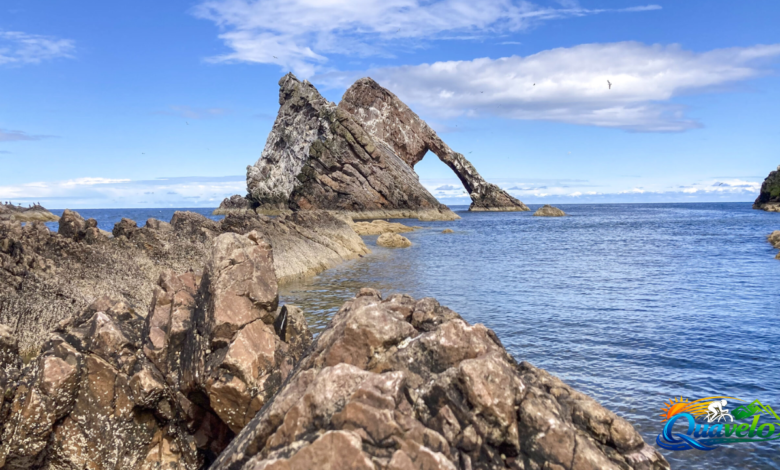
Bow Fiddle Rock is one of Scotland’s most remarkable natural attractions, drawing visitors from across the UK and beyond. Located on the beautiful Moray coastline near the fishing village of Portknockie, this striking sea arch is admired for its unusual shape, dramatic setting, and breathtaking coastal views. Whether you enjoy photography, walking, or discovering hidden gems, this famous landmark offers an unforgettable experience throughout the year.
The spectacular scenery surrounding Bow Fiddle Rock makes it an ideal destination for families, couples, solo travellers, and outdoor enthusiasts. Rugged cliffs, fresh sea air, and the sound of crashing waves create a peaceful atmosphere that showcases the best of Scotland’s natural beauty. This guide explores everything you need to know before planning your visit, from its fascinating history to the best viewpoints and visitor facilities.
What Is Bow Fiddle Rock?
Bow Fiddle Rock is a naturally formed sea arch situated just off the coast of Portknockie in Moray. The formation gets its name because it resembles the curved tip of a violin bow when viewed from the right angle. Over millions of years, powerful waves and coastal erosion gradually shaped the hard quartzite rock into one of Scotland’s most distinctive geological landmarks.
Today, the sea arch has become a favourite destination for photographers, walkers, and nature lovers. Visitors are captivated by its dramatic appearance and the stunning coastal scenery that surrounds it. The combination of rugged cliffs, clear sea views, and abundant birdlife makes this location one of the most photographed natural attractions along Scotland’s north-east coastline.
Where Is Bow Fiddle Rock?
Many visitors wonder where Bow Fiddle Rock is before planning their journey. The famous sea arch is located near the picturesque village of Portknockie in Moray, on Scotland’s north-east coast. It lies between the coastal towns of Cullen and Buckie, making it an excellent stop while exploring the scenic Moray Coastal Trail and nearby attractions.
The location is easy to reach by road, with clear signs directing visitors towards Portknockie. From the village, a short walk leads to several excellent viewing areas overlooking the sea arch. The surrounding coastline provides impressive panoramic views, making the journey almost as enjoyable as the destination itself.
How to Get to Bow Fiddle Rock
Travelling to Bow Fiddle Rock is relatively straightforward whether you are driving from Aberdeen, Inverness, Elgin, or other parts of Scotland. Most visitors choose to travel by car because it offers flexibility and easy access to nearby coastal villages. The roads leading to Portknockie are well maintained and pass through attractive countryside and coastal landscapes.
Those using public transport can travel by train or bus to nearby towns before completing the final stage by taxi or local bus service. Once you arrive in Portknockie, clearly marked walking paths guide visitors safely towards the coastal viewpoints. Comfortable footwear is recommended, especially during wetter months when paths may become uneven.
Bow Fiddle Rock Car Park and Visitor Facilities

Visitors will find a convenient car park close to the main walking route leading towards the coastline. The Bow Fiddle Rock car park provides easy access for families, photographers, and those with limited walking time. Parking is generally free, although spaces can become busy during weekends, public holidays, and the peak summer tourist season.
Portknockie also offers useful visitor facilities including cafés, local shops, public toilets, and picnic areas. Many travellers enjoy spending several hours exploring the village after visiting the sea arch. Friendly local businesses provide refreshments and traditional Scottish hospitality, adding even more enjoyment to a memorable day beside the Moray coast.
Bow Fiddle Rock Walk
The Bow Fiddle Rock walk is one of the highlights of any visit to the Moray coast. The well-marked coastal path is suitable for most visitors and offers spectacular views across the North Sea. Along the route, you can admire dramatic cliffs, rolling waves, and fascinating rock formations while enjoying the fresh sea air and peaceful surroundings that make this area so memorable.
Although the walk is relatively short, there are several places where visitors may wish to stop and appreciate the scenery. Benches and natural viewpoints allow plenty of opportunities to take photographs or simply enjoy the landscape. Comfortable walking shoes are recommended, particularly after rainfall, as certain sections of the path may become slippery due to changing weather conditions.
Best Viewpoint for Bow Fiddle Rock
Finding the best viewpoint is one of the most rewarding parts of visiting this spectacular coastal attraction. Elevated positions along the cliff tops provide uninterrupted views of the famous sea arch and surrounding coastline. From these viewpoints, visitors can fully appreciate the remarkable shape of the rock while watching waves break dramatically against the rugged shoreline below.
Many photographers choose to arrive early in the morning or later in the evening when the lighting is softer and the crowds are smaller. During sunrise and sunset, the changing colours across the sky create stunning reflections on the sea, making these times especially popular for capturing memorable landscape photographs.
Bow Fiddle Rock Photos and Photography Tips
Photographers from around the world visit Bow Fiddle Rock to capture its unique appearance and dramatic coastal scenery. Wide-angle lenses work particularly well because they allow both the sea arch and surrounding cliffs to appear within a single composition. Calm weather often produces beautiful reflections, while rough seas create equally dramatic images full of movement and energy.
Wildlife also adds interest to photographs throughout the year. Seabirds frequently fly around the cliffs, creating excellent opportunities for nature photography. Visitors should always remain behind safety barriers and avoid climbing onto unstable rocks, ensuring both personal safety and protection of this beautiful natural environment for future generations.
Bow Fiddle Rock Weather and Best Time to Visit
The weather around the Moray coastline can change quickly, so visitors should always check the forecast before setting out. Spring and summer generally provide the most comfortable conditions, with longer daylight hours allowing more time to explore the coastal paths and enjoy the impressive scenery surrounding the sea arch.
Autumn brings colourful landscapes and fewer visitors, making it an excellent season for peaceful walks and photography. Winter offers dramatic skies and powerful waves that showcase the coastline in a different light. Regardless of the season, waterproof clothing and sturdy footwear are highly recommended for a safe and enjoyable visit.
History and Geology of Bow Fiddle Rock
The fascinating history of Bow Fiddle Rock dates back millions of years, when geological forces and coastal erosion gradually shaped the quartzite rock into the striking sea arch visible today. Constant exposure to wind, rain, and waves slowly carved away weaker sections of the rock while leaving the harder stone standing against the powerful North Sea.
Over the years, the sea arch has become one of Scotland’s best-known natural landmarks and an important feature of the Moray coastline. Its distinctive appearance continues to attract geologists, photographers, and travellers who wish to witness one of nature’s finest examples of coastal erosion and geological beauty.
Things to Do Near Bow Fiddle Rock
After exploring the sea arch, visitors can spend time discovering the charming village of Portknockie, which offers picturesque harbour views and a welcoming atmosphere. Nearby Cullen Beach is another popular destination, providing golden sands, scenic walking routes, and opportunities to enjoy traditional Scottish seaside experiences with family and friends.
The surrounding Moray coastline also features several attractions worth visiting, including historic castles, coastal trails, wildlife watching locations, and local cafés serving freshly prepared food. Whether you are planning a short stop or a full day’s adventure, the nearby area offers plenty of activities that perfectly complement a visit to this famous natural landmark.
Conclusion
Bow Fiddle Rock is undoubtedly one of Scotland’s most impressive coastal landmarks, combining dramatic scenery, fascinating geology, and unforgettable walking opportunities. Whether you are visiting for the first time or returning to admire its beauty again, the sea arch never fails to leave a lasting impression. Its peaceful surroundings and breathtaking viewpoints make it a perfect destination for photographers, nature enthusiasts, and families seeking a memorable day out.
From its accessible walking trails and convenient parking to its stunning sunrise views and rich natural history, Bow Fiddle Rock offers something for every traveller. Adding this remarkable attraction to your Scottish itinerary allows you to experience one of the country’s finest coastal landscapes while exploring the charming village of Portknockie and the beautiful Moray coastline.
FAQs
What is Bow Fiddle Rock?
Bow Fiddle Rock is a famous natural sea arch made of quartzite, located off the coast of Portknockie in Moray, Scotland.
Where is Bow Fiddle Rock?
Bow Fiddle Rock is situated near the village of Portknockie on the Moray coast in north-east Scotland, between Cullen and Buckie.
How do I get to Bow Fiddle Rock?
The easiest way to reach Bow Fiddle Rock is by car. Visitors can also use public transport to nearby towns before taking a local taxi or bus to Portknockie.
Is there a Bow Fiddle Rock car park?
Yes, there is a convenient car park close to the coastal walking path, providing easy access to the main viewing areas.
How long is the Bow Fiddle Rock walk?
The walk is relatively short and usually takes between 30 and 60 minutes, depending on how often you stop to enjoy the scenery.
What is the best viewpoint for Bow Fiddle Rock?
The cliff-top viewing areas near Portknockie offer the best panoramic views and excellent photography opportunities throughout the day.
What is the best time to visit Bow Fiddle Rock?
Spring and summer provide pleasant weather, while sunrise and sunset are ideal for spectacular coastal photography.
Can you see the Northern Lights at Bow Fiddle Rock?
Yes. During clear autumn and winter nights with strong aurora activity, Bow Fiddle Rock can be an excellent location for viewing the Northern Lights.
Has Bow Fiddle Rock ever collapsed?
Although natural coastal erosion continues to shape the sea arch, Bow Fiddle Rock remains standing and is one of Scotland’s best-preserved natural rock formations.
Is Bow Fiddle Rock suitable for families?
Yes. The walking route is suitable for most families, although children should always be supervised near cliff edges.
Is Bow Fiddle Rock dog friendly?
Yes, dogs are welcome, but they should be kept under control, particularly near cliffs and around local wildlife.
What should I bring when visiting Bow Fiddle Rock?
Comfortable walking shoes, waterproof clothing, a camera, binoculars, drinking water, and suitable outdoor clothing are recommended for an enjoyable visit.
Are there facilities near Bow Fiddle Rock?
Yes. Portknockie offers cafés, public toilets, local shops, and picnic areas within a short distance of the main walking route.
Is Bow Fiddle Rock worth visiting?
Absolutely. Its unique sea arch, spectacular coastal scenery, and peaceful atmosphere make it one of the most rewarding natural attractions in Scotland.
What attractions are near Bow Fiddle Rock?
Nearby attractions include Cullen Beach, Portknockie Harbour, the Moray Coastal Trail, Findlater Castle, and several picturesque fishing villages that are perfect for exploring.
Also Read: south norwood